
 |
SUPPORTED LINKS MAILING LIST |
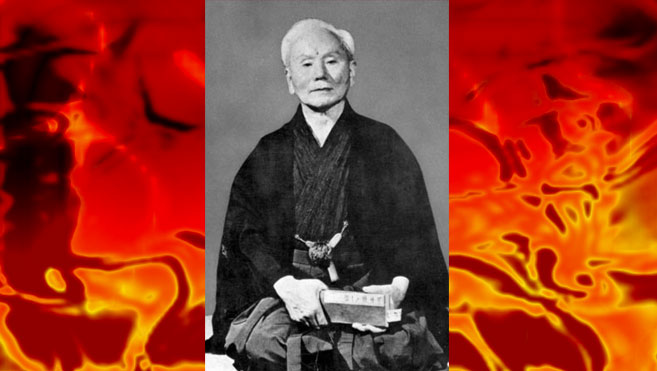
Shotokan Karate-DoShotokan founder, Gichin Funakoshi Shotokan training is usually divided into three parts: kihon (basics), kata (forms or patterns of moves), and kumite (sparring). Techniques in kihon and kata are characterized by deep, long stances that provide stability, enable powerful movements, and strengthen the legs. Shotokan is often regarded as a 'hard' and 'external' martial art because it is taught that way to beginners and coloured belts to develop strong basic techniques and stances. Initially strength and power are demonstrated instead of slower, more flowing motions. Those who progress to brown and black belt level develop a much more fluid style that incorporates grappling and some aikido-like techniques, which can be found in the black belt katas. Kumite techniques mirror these stances and movements at a basic level, but are less structured, with a focus instead on speed and efficiency. Philosophy Gichin Funakoshi laid out the Twenty Precepts of Karate, (or Niju kun) which form the foundations of the art, before some of his students established the JKA. Within these twenty principles, based heavily on Bushido and Zen, lies the philosophy of Shotokan. The principles allude to notions of humility, respect, compassion, patience, and both an inward and outward calmness. It was Funakoshi's belief that through karate practice and observation of these 20 principles, the karateka would improve their person. |